- By Tadakatsu, originally posted July 7, 2017. Updated July, 2026.

This is my very best, unbiased attempt at placing in order the 50 greatest Japanese metal bands ever. It was extremely difficult, as there were so many good candidates, and a whole bunch of fantastic bands didn’t quite make the cut.
My selection of the following bands is based, for the most part, on their influence within the Japanese music scene and overall success, spanning across all metal genres. Weighted against pure influence was bands with long, consistent discographies as well as others with stretches of commercial dominance. (Note: hard rock bands are not included on this list unless they were pretty much equally fused with heavy metal. To avoid the inevitable fighting in the comment section, I also didn’t include alternative/nu-metal or any of the murkier core subgenres, with all due respect to those bands.)
This list has been a very long time in the making, with countless hours of research. If you’re already a Japanese metal fan, I’m sure you can guess quite a few acts on this list, but I thought it would be fun to do anyway.
Before we begin, as I’ve now revised this list nearly 10 years out from originally writing it, here are a few bands that have been bumped from the old top 50, thanks to newer major names rising to prominence and leaving a larger impact, or due to names whose achievements I put greater stock into all these years later. Though no longer in my top 50 where they were originally placed, these are still important to Japanese metal’s rich history.
Kuni

Formerly ranked 45th. 🔻
Origin: Tokyo, Japan
Year Formed: 1986
One of the longest running solo careers in Japanese metal, Kuni has long been a respected figure in the scene and one of Japan’s finest 80s metal guitarists. A very well-connected musician internationally, Kuni’s albums have featured numerous guests from all over the world. In a career spanning over 40 years, Kuni has been featured at several major Japanese festivals, including two appearances at Loud Park.
Precious

Formerly Ranked 48th. 🔻
Origin: Tokyo, Japan
Year Formed: 1986
Precious were a band that appeared early and set the bar high for the many Japanese power metal bands who appeared in the years following. One of the most popular bands attached to the Mandrake Root label, their album To Glory We Steer has continually been considered a Japanese metal classic ever since its release in 1990. Precious’ leader Akira Kajiyama has gone on to be an extremely well-regarded guitarist in his homeland and has collaborated with several international metal musicians over his extensive career.
Liv Moon

Formerly ranked 44th. 🔻
Origin: Tokyo, Japan
Year Formed: 2009
Liv Moon was a mainstay in Japan’s symphonic/power metal scene through the 2010s. Most notably boasting the lovely and absurdly powerful voice of Akane Liv, the rest of her band has always been just talented, and for quite a few years included not only one of Japan’s biggest guitar names, Takayoshi Ohmura (who was also part of the hugely successful alternative metal group, Babymetal), but also perhaps the most prominent bassist in Japanese metal too, that being Masaki. Liv Moon has also sold well, charting respectably on Oricon with every release in their career thus far. While a rather large pause in activity has killed some of their earlier momentum, they’re still an excellent band within the Japanese symphonic metal scene.
Light Bringer

Formerly ranked 43rd. 🔻
Origin: Tokyo, Japan
Year Formed: 2011
In my opinion one of the finest power metal bands Japan has ever seen, they unfortunately disbanded while they were arguably still at their peak. With one of the most impressive front-women to ever lead a Japanese metal band in Fuki, combined with a dizzying technical prowess instrumentally, surpassed by few within the genre, their sudden end of activity came as a shock to many. While I expected Light Bringer to return some day and release more albums of the same standard as their existing material, in actuality they’ve continued to be on hold for several years at this point, and as a result they’ve gradually fallen from my ranking.
50. Lazy

Origin: Osaka, Japan
Year Formed: 1973
Lazy began as a high school band comprised of five friends going by the stage names of Michell, Suzy, Funny, Pocky, and Davy. By the late 70s they signed with RCA and were pushed by the label to become a Japanese answer to pop rock acts such as the Bay City Rollers (who were shockingly big in Japan) and released multiple albums under this forced style. However, Lazy’s members desperately wanted to play hard rock and heavy metal and when they released their fifth album Earth Ark, they completely disregarded their management’s direction, writing the music they truly wanted to write, resulting in one of the most famous heavy metal/hard rock albums in the very earliest years of Japanese metal. This band launched major careers for all of its members, Michell became a hugely successful singer under his real name, Hironobu Kageyama. Shunji “Pocky” Inoue would become moderately successful making soundtracks in the band Neverland. Shortly after Lazy broke up, the three remaining members Suzy, Davy and Hiroyuki “Funny” Tanaka quickly created a certain band who appear just a wee bit higher on this list, though Tanaka left early on and also joined Neverland with Pocky.
Lazy – Dreamer
49. Marino

Origin: Osaka, Japan
Year Formed: 1979
Heavily influenced by the earliest bands in the NWOBHM movement of the U.K., Marino were way ahead of the game in Japan, forming in Osaka in 1979 and releasing their earliest music that same year. One of the first pulls-no-punches, pure heavy metal bands in Japan, Marino played an aggressive heavy metal that at times straddled the line between heavy and full-tilt speed metal, before many of their eventually famous counterparts had even formed. During their height in the mid 1980s, Marino were easily one of the most famous metal bands in the highly populous Kansai region, and were well known players in Japanese metal years before the rival Kanto region’s metal scene had really begun.
Marino – Impact
48. Corrupted

Originally ranked 46th. 🔻
Origin: Osaka, Japan
Year Formed: 1994
One of Japan’s best known extreme metal acts, and one of the heaviest, loudest metal bands on the planet, Corrupted have been a staple of Japan’s underground metal scene for many years, performing an unmistakable, bone-crushing sludge/doom metal. A reclusive and incredibly private band, they opt to let their music speak for them. With several critically acclaimed studio albums to date and a handful of other EPs and splits, Corrupted look to remain one of Japan’s leading extreme acts for years to come.
Corrupted – El Mundo Frio
47. Blood Stain Child

Formerly ranked 42nd. 🔻
Origin: Osaka, Japan
Year Formed: 2000
Blood Stain Child were one of the more popular Japanese metal bands internationally during the 2000s. The band rose to prominence through combining a sound influenced by that of bands like Children of Bodom and In Flames, together with trance elements. While as a fan of the band I’ll be the first to say that the band’s experiments haven’t always worked, when they do they can be a truly great band. Though there were a bunch of other melodic death metal bands who also appeared in Japan at the turn of the century, almost none of them became quite as well known nor have lasted as long as Blood Stain Child; though a few challengers such as Gyze have appeared in recent years. There is however one melodeath band yet to come on this list.
Blood Stain Child – Sumeragi
46. Nokemono

Formerly ranked 41st. 🔻
Origin: Tokyo, Japan
Year Formed: 1977
If they weren’t around for such a short amount of time with just one album to their name, they would easily be much higher on this list. Nokemono were one of the most important players in early Japanese metal music, and one of the first to release a full-length album that was predominantly heavy metal, preceding a whole bunch of eventual Japanese metal legends featured higher on this list. They were a big part of putting Japanese metal on the map, winning Yamaha’s challenging MidLand band battle competition in 1978, and in the wake of their run of Yamaha successes, proceeded to tour Japan with Judas Priest later that same year, cementing Nokemono as an integral part of the first wave of Japanese metal. Their lone album, From the Black World (1979) has grown to become a cult classic among Japanese metal fans.
Nokemono – Run Away
45. X-Ray

Formerly ranked 40th. 🔻
Origin: Chiba, Japan
Year Formed: 1981
One of the most popular heavy metal bands in the Kansai region during the 80s, X-Ray left their mark quickly during a pretty short 5 year run from 1981 to 1986 where they released four full-length albums. While the band lacked longevity, they made up for it with quality, as the band’s albums have been favorites among many Japanese metal collectors for years now; many reprints of X-Ray’s works having been issued in the years since their disbandment. Former members of the band have also gone on to take part in several notable metal projects in Japan.
X-Ray – Question
44. D

Formerly ranked 39th. 🔻
Origin: Kanagawa, Japan
Year Formed: 2003
A major player in the modern Japanese metal world, D quickly became one of the most popular visual kei bands after forming in the mid 2000s. Playing a very strange and diverse, but highly complex and entertaining brand of symphonic/gothic metal, D have also managed to sell well, having made dozens of appearances on Oricon over a nearly two-decade run before the band went on hold. Several of the band’s members have also enjoyed decent solo careers, especially frontman Asagi.
D – Yami Yori Kurai Doukoku no Acapella to Bara Yori Akai Jounetsu no Aria
43. Terra Rosa

Formerly ranked 38th. 🔻
Origin: Osaka, Japan
Year Formed: 1982
One of Mandrake Root Records’ flagship bands and also one of Japan’s first successful female-fronted metal groups, Terra Rosa are best remembered for their iconic debut album “The Endless Basis”. They also made two other excellent albums shortly after as well. Several current and former members of this band are also members of many of the other bands on this list, and the caliber of musicians involved in this band truly speaks for how good the product they put out was. Though only semi-active present day with key members having retired or gone on to other projects, Terra Rosa are still talked about fondly by Japanese metal fans.
Terra Rosa – Hi no Naka ni Kage
42. Reaction

Formerly ranked 37th. 🔻
Origin: Tokyo, Japan
Year Formed: 1983
Speed metal was pretty commonly played among metal bands during the mid 80s in Japan, but very few of them caught on before the appearance of a certain legendary band way higher on this list. One of the very few that did become quite popular in the early days was Reaction. After a successful run throughout the majority of the 1980s, the band unfortunately parted ways, with a couple of the band’s core members tragically passing away a few years later. Thankfully, the legacy they did leave was clearly a positive one, as this was a band that was so well respected by their peers that a tribute album was made in honor of them, featuring an all-star cast of members of bands from nearly a quarter of this entire list of all-time greats.
Reaction – Think ‘Bout Tomorrow
41. Destrose

Formerly unranked. 🔺
Origin: Tokyo, Japan
Year Formed: 2006
This is one of the more unique bands I can recall, to be honest. Destrose were around for nearly a decade and had a modest discography, though only one full-length to their name. While a perfectly good and talented heavy metal band, their output isn’t really where their significance lies. This band was one of the most impressive talent factories that Japanese metal ever saw, and while the band itself can’t realistically be described as anything but unstable, they did manage to hire and fire a staggering number of skilled women, leading to numerous popular all-female and female-fronted metal bands. Band leader Mina, ever the perfectionist, managed to cycle through over 30 different bandmates in Destrose’s short run, which even included her eventual departure leaving the band without an original member. In Destrose’s wake were numerous quality bands of varying success including Fate Gear, Disqualia, Octaviagrace, Nemophila, Mardelas, and more. Most significantly however are two more bands featured a bit higher on this list.
Destrose – Skykiller
40. Outrage

Originally ranked 47th. 🔺
Origin: Nagoya, Japan
Year Formed: 1982
One of Japan’s earliest and best-known thrash metal pioneers, Outrage enjoyed a consistent rise throughout the 1980s, achieving reasonable popularity at the time thanks especially to back-to-back strong albums to kick off their career. While most thrash bands experienced their biggest success in the 80s, Outrage are a rare case of a classic thrash band being at their height in the present day; having evolved into their own unique sound, the band has made several appearances on the Oricon charts steadily since the mid-2000s. In the last few years, vocalist Naoki Hashimoto has attained considerable popularity as a solo artist thanks to his work with Guilty Gear creator Daisuke Ishiwatari on several of the game’s more recent soundtracks, as a result drawing even more fans to the resurgent Outrage. While the linked video is more on the speed metal side of their sound, it’s a prime example of this band demonstrating that they’ve still got it.
Outrage – Blood & Scars
39. Jupiter

Formerly ranked 36th. 🔻
Origin: Tokyo, Japan
Year Formed: 2013
Initially created as somewhat of a successor to another band a bit higher ranking on this list when that band went on hiatus, Jupiter jumped immediately into a major spotlight in the visual kei scene; and they certainly capitalized, releasing two albums which are arguably some of the best power metal to come from any Japanese band at any point in time. Featuring what is considered by many as the finest guitar duo in the country, matched with a rhythm section that is talented enough to equal them, Jupiter are a band that was built for Japanese metal stardom, and they’ve yet to disappoint. This is another band who will likely rise in these rankings significantly over the coming years with an outside shot to even surpass some of it’s members’ main band eventually.
Jupiter – Zeus: I. Legend Never Die
38. Doom

Formerly ranked 35th. 🔻
Origin: Tokyo, Japan
Year Formed: 1985
One of the most innovative and straight up bizarre Japanese bands ever, Doom are one of Japan’s all-time great progressive and thrash metal acts. With a sound every bit as oddball as their appearance, Doom thrived in Japan’s underground metal scene for essentially their entire career, releasing 5 albums and a handful of EPs and splits before the tragic passing of fretless bass mastermind Koh Morota in 1999. They would release one more album later that year before calling it quits permanently… or so we thought. Doom reunited in 2014 and have picked up about as strong as they left off, as evidenced by their comeback album. It will be interesting to see if they can continue to build on their already legendary reputation, and as of the mid 2020s, so far, so good.
Doom – Complicated Mind
37. Sabbrabells

Formerly ranked 34th. 🔻
Origin: Tokyo, Japan
Year Formed: 1980
A pioneering 80s metal band in Japan and one of the very first occult themed heavy metal bands to appear in the island nation, Sabbrabells had the distinction of being the first heavy metal band to use occult lyricism and imagery to be signed to a large record label in Japan, joining King Records, a truly remarkable feat for obvious reasons. With one of the tightest sounds of any Japanese metal band in the 80s, fronted by howling madman Kiichi Takahashi, Sabbrabells released three well received albums and an EP. Sabbrabells unfortunately called it quits shortly after the third album “One Night Magic”, but are still remembered as one of the great 80s Japanese heavy metal bands. The band reunited on-and-off to perform a handful of acclaimed shows with original singer Kiichi Takahashi before finally reuniting fully in 2019 with nearly their entire original lineup.
Sabbrabells – Black Hill
36. Crowley

Formerly ranked 33rd. 🔻
Origin: Nagoya, Japan
Year Formed: 1982
Much like Sabbrabells, Crowley were a band that narrowly missed out on what could have been something special. One of the first heavy metal bands in Japan with an occult image, they quickly built up a reputation of infamy in Japan, taking shocking promo photos of the band with nooses, weapons and satanic props, which in turn led to overseas tour offers, western metal magazine features and label offers; however internal conflict divided the band, causing members to leave and forcing them to disband before their careers really took flight. Their “shock image” was an influence on the eventual rise of the visual kei scene which would be pioneered by a few other bands on this list.
Crowley – Stalker
35. Mary’s Blood

Formerly unranked. 🔺
Origin: Tokyo, Japan
Year Formed: 2009
Mary’s Blood, one of many such bands created by disgruntled former members of the earlier-mentioned Destrose, were one of the first true shining stars of the modern “ladies’ metal” boom in the last 20 years of the scene. This band was seriously everywhere and drew significant attention in the online metal community for a while. They had talent, they had star power and they had a chip on their shoulder to not just out-do their former band, but leave them in the dust. While they’ve been on hold for a few years now with members working on other projects, Mary’s Blood still remains a popular modern Japanese staple, and if the band should return, expect them to rise in these rankings again some day.
Mary’s Blood – Bite the Bullet
34. Blizard

Formerly ranked 32nd. 🔻
Origin: Tokyo, Japan
Year Formed: 1984
Blizard were one of the first major heavy metal acts in the Kanto region (Tokyo/Saitama/Yokohama, etc.) of Japan. At roughly the same time that the band featured in the legendary Grand Metal Festival in 1984, Blizard were signed by Warner Bros. Records for the Japanese market; from there they quickly churned out 7 full-length albums over the course of 6 years, several of which are among Japanese metal’s most memorable 80s albums. Some members of this band would later take part in several other notable metal bands.
Blizard – Stealer
33. Action!

Formerly ranked 31st. 🔻
Origin: Osaka, Japan
Year Formed: 1982
A forefather of Japanese metal, Action’s music has been played since the mid 1970s when several of its members played in the band Sansuikan. With a career spanning over 30 years if you include Sansuikan, Action! released a whopping 7 full-length albums along with two EPs between 1984 and 1989, and were an integral part of the Kansai region’s metal scene during its formative days until Action parted ways in 1998. Members of Action! were also attached to the Japanese prog rock legends Novela during the early 80s. Though no longer active, Action! reunited from 2003 to 2009 and released two more quality albums before calling it quits for good.
Action! – 100,000 Volt
32. 44 Magnum

Formerly ranked 29th. 🔻
Origin: Osaka, Japan
Year Formed: 1977
44 Magnum were one of the very early Japanese metal bands, forming in 1977. While primarily a hard rock/AOR band during the majority of their career after about 1985, their first few albums were an energetic traditional heavy metal, the first two of which quickly became Japanese metal classics. They were one of the key bands in Japan’s first wave of metal, and took part in some of Japan’s most important early metal festivals. While singer Paul has faced some significant health challenges in recent years, he and the band admirably still continue to carry on what has become a strong legacy within the scene.
44 Magnum – No Standing Still
31. G.I.S.M.

Formerly ranked 30th. 🔻
Origin: Tokyo, Japan
Year Formed: 1980
G.I.S.M. were at the very forefront of Japan’s metal/punk fusion, a style that saw quite a bit of popularity in Japan’s underground music scene in the 80s. Famed for their extremely violent and unpredictable performances, they attained a large cult following both in Japan and internationally among both metal and hardcore punk fans and are considered a highly influential band in both scenes. If you see any modern Japanese hardcore punk/heavy metal fusion bands, a significant degree of credit for their existence is owed to G.I.S.M.
G.I.S.M. – Good As It Is
30. Intestine Baalism

Formerly unranked. 🔺
Origin: Tokyo, Japan
Year Formed: 1994
A major omission from my original list, though it was simply a mistake; of course Intestine Baalism deserve a good spot in here. In melodic death metal, it’s easy for bands to sacrifice a degree of their death metal heaviness for melodic leanings, and this is especially prevalent in bands influenced by Finnish melodeath with its own power metal leanings, as so many Japanese bands in the style have taken inspiration. Intestine Baalism, inspired more-so by the Swedish side of the style’s sound, are one of exceedingly few that never gave up an ounce on the brutal side of things, despite still intertwining some lovely melodic elements into their music. One the most acclaimed melodic death metal bands of all time, regardless of nation, Intestine Baalism, despite a smaller discography, have been titans in the Japanese extreme metal world for over 30 years.
Intestine Baalism – Flesh for the Twelfth Omnipotent
29. Lovebites

Formerly unranked. 🔺
Origin: Tokyo, Japan
Year Formed: 2016
Another impressive group created by disgruntled ex-Destrose members, Lovebites are likely the biggest Japanese metal band of the 2020s so far, and I can’t really think of particularly close competition, as far as stuff eligible for this list’s criteria goes. The dizzyingly talented band (whose lineup has stayed very stable unlike their old situation) took off immediately after their 2017 debut. Earning an enormous fanbase and becoming a frequent overseas touring staple, Lovebites’ star has burned the brightest of any all-female metal band in the country’s history, aside from one particular name that features much higher on this list.
Lovebites – Bravehearted (Awakened)
28. Saber Tiger

Origin: Sapporo, Japan
Year Formed: 1981
Here’s a band who have been decently well known for ages now, yet only recently made the leap into well deserved commercial success after toughing it out independently for several years. To wit, the band released 8 demos before deciding to make albums under their own label, which they did for a few albums before finally getting signed by a big record label almost 17 years after formation; even then their commercial breakout didn’t occur until a bit before their 30th anniversary. One of Japanese metal’s finest models for sheer dedication, it’s amazing they didn’t catch on with a larger audience sooner, as the band evolved over the years to play one of the most technically proficient and energetic styles of power/progressive metal to ever come out of the country.
Saber Tiger – Devastation Trail
27. Aion

Origin: Osaka, Japan
Year Formed: 1983
There might not be a thrash metal band in Japan who had more commercial success than Aion did at their peak. During the early 1990s, they truly hit their stride and were not only making critically acclaimed albums, but selling them too, with a string of several releases placing high on the Japanese sales charts. Aion were also major pioneers of visual kei during the 90s era of the scene. It could be reasonably argued that the Japanese thrash metal scene pretty much revolved around Aion in their heyday, considering how many of their members were or are a part of a whole bunch of other major thrash acts in the country. There are however two more even greater thrash metal band who we will get to just a little bit later.
Aion – Think Ever After
26. Vow Wow

Formerly ranked 24th. 🔻
Origin: Tokyo, Japan
Year Formed: 1984
A side-project created by Kyoji Yamamoto as an attempt to break into the U.K. market, Vow Wow were the first Japanese band to achieve moderate success in Britain with their album Helter Skelter reaching #75 on the U.K. Albums Chart. This band also achieved large-scale success in Japan with their albums Vibe and Mountain Top both hitting the top 20 in weekly album sales. They also had two singles that charted in the U.K. too, a feat unmatched by any other Japanese hard rock/heavy metal band. With a keyboard heavy sound highly unlike Kyoji’s other, more famous band, Vow Wow’s musical quality was still held nearly as high; and their string of albums released from the mid to late 80s remain some of Japan’s best known, even today.
Vow Wow – Shot in the Dark
25. Aldious

Origin: Osaka, Japan
Year Formed: 2008
Look around the modern Japanese metal scene, you see an awful lot of ladies playing heavy metal, don’t you? Do you notice that a whole bunch of those women are playing power metal? A huge portion of credit for that goes to Aldious, who have been extremely popular in Japan since they appeared in the late 2000s. Playing a lovely and energetic brand of power metal, Aldious have been emulated by several acts during the past few years, drawing countless new female musicians to heavy metal music. In the midst of leading this modern feminine J-metal movement, Aldious have sold well enough to feature in the top 50 on Oricon with every release in their career thus far, with multiple top 10s in the process. While all-female metal and rock bands wouldn’t be as common in Japan as they are without Aldious, there’s one other band who hold even more significance in that regard which we will get to a few bands further ahead. While a band like Lovebites might be significantly more popular present-day, I put a lot of weight in Aldious striking early and setting the tone in their subscene.
Aldious – Dominator
24. Gargoyle

Formerly ranked 22nd. 🔻
Origin: Osaka, Japan
Year Formed: 1987
While Aion’s star burned brighter in the 90s during their height, Gargoyle have stood the test of time far better, cementing their legacy as one of the most consistently great metal acts in Japan for over 30 years. Another early and influential figure in visual kei, I would argue that Gargoyle are even more important to the thrash metal of Japan due to the fact that their creativity never burned out, whereas Aion’s did fairly early in their career. Playing a highly complex progressive thrash style, elements of Gargoyle’s sound have been an influence on many other Japanese metal acts over the years.
Gargoyle – Piichiku Paachiku
23. Concerto Moon

Formerly ranked 20th. 🔻
Origin: Tokyo, Japan
Year Formed: 1996
Concerto Moon are considered one of Japan’s very greatest power metal acts, serving as a resurrection of sorts, which helped metal music return to reasonable prominence in Japan during the late 1990s to early 2000s. In turn, they’re also a contributing factor in why Japan seems to have loved power metal so much since the mid 2000s. Spearheaded by one of the finest neoclassical guitarists in Japan, Concerto Moon were one of the few bands offering fresh ideas and churning out quality music during the period when metal as a whole was at its least popular in their country. While there’s several power metal bands in Japan who are more famous these days, Concerto Moon left their impact when it mattered most.
Concerto Moon – Save My Own Life
22. Animetal

Formerly ranked 16th. 🔻
Origin: Tokyo, Japan
Year Formed: 1996
Anison has been a thing in Japan for a very long time, but when the supergroup Animetal appeared in the late 90s, they put a new spin on performing theme songs, rebranding classic Japanese television themes as metal anthems. With an all-star lineup of Japanese metal legends, Animetal were popular enough that in recent years several other bands have tried a similar idea. For a time, Animetal were active under the name Aisenshi, though they’ve revived the main Animetal project recently. Nine out of the ten members who ever played in this band are tied directly to at least one of the other bands on this list of all-time greats.
Animetal – Pegasus Fantasy – Saint Seiya
21. Church of Misery

Formerly ranked 28th. 🔺
Origin: Tokyo, Japan
Year Formed: 1995
One of Japan’s most internationally recognized and acclaimed metal bands within their respective style, Church of Misery have been titans in the Japanese doom/stoner metal scene since the late 90s, and are one of the country’s few bands with enough international success to tour worldwide on a regular basis. From quirks like their sole lyrical theme of murderers, to band leader Tatsu Mikami’s unusual bass technique, they’re a band full of character and unique personality, as can be found across a large discography spanning 7 albums, as well as several EPs and splits. Despite several lineup changes over their career, both their popularity and quality have held steady.
Church of Misery – El Padrino
20. Ningen-Isu

Formerly ranked 25th. 🔺
Origin: Hirosaki, Japan
Year Formed: 1987
For the record, Ningen-Isu have always been very, very good, however, only in more recent years has that translated to major commercial success. Ningen-Isu are a band who worked their asses off for just about 20 years before finally achieving their commercial breakthrough in the late 2000s. In the following years, their popularity has continued to rise, all without a drop in musical quality, and since the mid 2010s the band now frequently achieves high charting releases on Oricon. Their massive spike in popularity has allowed the hard working trio to quit their day jobs to concentrate on creating and performing music full-time, and the band has even begun performing major metal festivals in recent years, such as Ozzfest, as well as touring overseas.
Ningen Isu – Great King of Terror
19. Flower Travellin’ Band

Origin: Tokyo, Japan
Year Formed: 1969 (1968 as The Flowers)
The Flower Travellin’ Band were one of the earliest bands in heavy metal music on a global scale, let alone in Japan. With a crushingly heavy, dark, and trippy, Black Sabbath influenced sound, Flower Travellin’ Band were way ahead of their time, blending said Sabbath influence with psychedelic Asian influences. The heaviest band to be found anywhere East of the U.K. in the early 70s; their legendary album Satori, while not initially successful, has become a classic among Japanese metal fans, to the extent that in nearly 50 years, the album has never gone out of print. Don’t sleep on their other records too; while more progressive in a lot of areas, this band simply never lost their touch. Considered by many to be the first Japanese heavy metal band, they have been cited as an influence by numerous musicians including Mikael Åkerfeldt of Opeth and have been covered by many others including Gargoyle, Outrage and even Western groups like the Claypool Lennon Delirium.
Flower Travellin’ Band – Satori Part 1
18. Flatbacker / EZO

Origin: Sapporo, Japan
Year Formed: 1982
Flatbacker were a gritty heavy/speed metal band from Sapporo, one of the first big metal bands to come from the Hokkaido region. Among their early successes, this incarnation of the band most notably was the winner of Yamaha’s Stage Flight ’84 band battle, and their win earned them a competing slot at Yamaha’s prestigious Light Music Contest ’84 where they also won a prize. Following the release of two popular albums under the Flatbacker name in 1985 and 1986, they changed their name to EZO and their style to heavy metal/hard rock and along with a handful of other Japanese bands they relocated to America in an attempt to break out in the American market. With the assistance of Gene Simmons, EZO released their first album under their new name through Geffen Records, the second Japanese metal band to ink a deal with a major American label, and in turn they became the second Japanese metal band to crack the American Billboard sales charts, reaching a modest #150. This was enough for a few of their songs such as House of 1,000 Pleasures to receive airplay on radio stations internationally and hard rock television programs for the better part of the late 1980s; in fact a few prominent shows such as Dee Snider’s House of Hair continue to play EZO’s music occasionally.
EZO – Black Moon
17. Boris

Formerly ranked 21st. 🔺
Origin: Tokyo, Japan
Year Formed: 1992
One of Japan’s most successful bands internationally, it’s impossible to pin a single genre to Boris, as they love to play a little bit of everything: drone, noise, doom, sludge, ambient, you name it. Boris have had a remarkably strong career, touring worldwide alongside names such as Nine Inch Nails, Melvins, Sunn O))) and recording collaborative efforts with numerous other musicians including Merzbow and Ian Astbury, to name a few. Over the course of their illustrious career, they’ve released more than 30 studio albums and show no sign of slowing down yet.
Boris – Heavy Friends
16. Versailles

Formerly ranked 17th. 🔺
Origin: Tokyo, Japan
Year Formed: 2007
Around 2007, power metal became a very popular genre within the visual kei scene for the first time since the late 90s. This power metal revival in visual kei and the several dozen bands in the scene that have followed are due in large part to Versailles’ explosion in popularity during the late 2000s. Famous partially for their dynamic duo of guitarists Teru and Hizaki, I would estimate Versailles were the second most popular power metal band in Japan across the 2010s, behind only one band who are a few spots further up this list. Versailles themselves are likely to climb a few more positions before they call it quits, though solo projects as well as side-projects like Jupiter admittedly have taken some of the band’s momentum in more recent years, for better or worse.
Versailles – Ai to Kanashimi no Nocturne
15. Dead End

Formerly ranked 16th. 🔺
Origin: Tokyo, Japan
Year Formed: 1984
Credited as one of the very first bands in the visual kei glam movement, Dead End have been one of the forerunners of the scene for decades now. Playing a dark and eerie brand of heavy metal, Dead End are responsible for many of the musical traits now synonymous with visual kei bands that play heavy, Gothic, symphonic and power metal. Earlier in their career, guitarist You Adachi was at one point considered by some to be the most talented guitarist in all of Kansai, while vocalist Morrie is regarded as a legendary visual kei singer.
Dead End – Sacrifice of the Vision
14. Sex Machineguns

Formerly ranked 11th. 🔻
Origin: Kawasaki, Japan
Year Formed: 1989
Between roughly the years 1998 and 2004 there wasn’t a single metal band in Japan whose star burned brighter than Sex Machineguns. Famed for their highly energetic heavy/speed/power metal and humorous lyrics, performances, and music videos; they were one of the bands at the very forefront in re-popularizing metal music in Japan after the worldwide 90s lull that hit pretty much every metal scene. While they’re not as popular as they once were, during an incredibly successful run from the late 90s through late 2000s, Sex Machineguns charted consistently on Oricon with 9 albums (including a streak of 5 top 10 selling albums), as well as 12 consecutive top 40 singles, and the band has appeared on the Oricon charts with every album they’ve ever released.
Sex Machineguns – Aijin 28
13. Mari Hamada

Formerly ranked 14th. 🔺
Origin: Tokyo, Japan
Year Formed: 1983
Beginning her career on the band battle circuit with a group called Misty Cats, Mari Hamada’s career would gradually grow to become the most successful female Japanese hard rock and heavy metal solo artist of all-time, Mari Hamada is a true Japanese rock legend. Though musically she may be considered hard rock more often than heavy metal, she has alternated between the two genres countless times throughout her many albums, more recently delving into more straightforward power metal records. With countless high appearances on the Oricon charts, Mari Hamada has sold multiple million albums over the course of an acclaimed career dating back to the early 80s, and she’s showing no signs of slowing down yet.
Mari Hamada – Noah
12. Sigh

Formerly ranked 13th. 🔺
Origin: Tokyo, Japan
Year Formed: 1990 (1989 as Ultra Death)
Probably the most popular extreme metal band in Japan since the mid 1990s and, interestingly, one of the only bands to have ever signed with Euronymous’ infamous label Deathlike Silence records, Sigh are without question as talented as they are eccentric, and trust me, they’re pretty nutty. Fusing avant-garde music with black metal, they’ve built a strong following both within and outside of Japan and especially online. Employing many instruments not typically found in black metal, let alone simultaneously, Sigh has made use of keyboards, synths, pianos, organs, tambourines, mellotrons, glockenspiels, bells, gongs, sitars, and several other instruments, they even have a dedicated saxophone player and co-vocalist, Dr. Mikannibal. These legendary weirdos have received constant critical acclaim throughout their careers. The first letter of all of their core albums and EPs are titled to spell out “Sigh” with every four releases, one of the many small traits that attest to how bizarre these guys are.
Sigh – The Transfiguration Fear
11. Dir En Grey

Formerly ranked 10th. 🔻
Origin: Osaka, Japan
Year Formed: 1997
Yes, there’s a “modern metal” band on this list, but if any are deserving it’s certainly Dir En Grey, whose true genre is almost impossible to define, as they’re so diverse and experimental, they’re just as much progressive metal as anything else, to be honest. The most popular extremely heavy visual kei band in the country since the late 1990s, they’ve achieved the remarkable feat of never having an album chart outside of the top 10 on Oricon over a total of 12 full-length albums as of 2026, with them approaching their 30th anniversary. They’re also incredibly influential in the visual kei scene with innumerable smaller bands taking heavy influence from them, though Dir En Grey themselves for the most part no longer adopt the aesthetics of a visual kei band.
Dir En Grey – Rinkaku
10. Earthshaker

Formerly ranked 7th. 🔻
Origin: Osaka, Japan
Year Formed: 1978
Not only were they early, but they quickly rose to the top and released three very successful albums in rapid succession to start their career. While initially more NWOBHM inspired, Earthshaker were eventually the pop-metal gods of Japan throughout the 1980s, only really rivaled by hard rock band Make-Up whose concept was similar, though Make-Up gravitated towards hard rock much more. Earthshaker were undeniably heavy metal, but topped with bright, cheerful keyboards along with catchy hooks and melodies, and the soaring, emotional vocals of Marcy Nishida. Picture a more metallic Van Halen/Y&T style which was inevitably a recipe for success for the band during that time, as Earthshaker were no less than the second most famous heavy metal/hard rock band in the entire Kansai (Osaka/Kyoto) region of Japan for the entirety of the 80s, trailing just one band who I can’t name quite yet. Though their popularity waned in the 90s as their sound softened, they returned in the 2000s with a new-found passion and energy which has lasted to this day, going back to their hard rock/heavy metal roots on recent albums.
Earthshaker – Time is Going
9. Sabbat

Formerly ranked 11th. 🔺
Origin: Kuwana, Japan
Year Formed: 1984 (1983 as Evil)
One of the most internationally recognized Japanese metal bands, Sabbat have long been one of the most popular and influential extreme metal bands in Japan, particularly in relation to thrash and black metal. Counted as part of the first wave of black metal in the early-mid 80s, Sabbat has toured abroad constantly and have played perhaps thousands of shows, many of which have been played at international metal festivals. Over their 40+ year career, Sabbat have co-released albums with dozens of metal acts from various countries including bands such as Coroner, Tankard, Agathocles, and Kreator among others. I place them just a hair ahead of Sigh in terms of importance, as they’re undeniably one of the biggest reasons why extreme metal caught on in Japan in the first place.
Sabbat – The Dwelling – The Melody of Death Mask
8. Galneryus

Formerly ranked 9th. 🔺
Origin: Osaka, Japan
Year Formed: 2001
If you’re familiar with Japanese metal, you’ll probably notice that power metal is absolutely everywhere, and while I’ve pointed to a few other bands’ influence in that regard earlier in the article, arguably the biggest contributor to the Japanese power metal explosion of the mid 2000s has been Galneryus. With a fusion of mind-blowing guitar and keyboard work from Syu and Yuhki respectively, as well as a rhythm section who are just as impressive, topped with the soaring vocals of Masatoshi Ono and formerly the equally talented Yama B, Galneryus have built a legacy for themselves as being as musically consistent, despite a couple major member changes, as they are individually talented. Syu is regarded by many as one of the most skilled neoclassical guitarists in the world, let alone Japan, and his band Galneryus has climbed upwards steadily since their formation in 2001, selling very well from the very moment they appeared.
Galneryus – Ancient Rage
7. Onmyo-za

Formerly ranked 8th. 🔺
Origin: Osaka, Japan
Year Formed: 1999
While Sex Machineguns were the biggest metal band in Japan in the early 2000s, not far behind were always Onmyo-za whose popularity has only expanded in the years since, whereas Sex Machineguns’ has dropped off. Playing a dramatic folk-influenced heavy metal, Onmyo-za have released a steady chain of extremely successful albums since 2002 and of their last 10 albums, not one has placed lower than 13th in sales on Oricon. Vocalist Kuroneko is one of the biggest modern pioneers of women in Japanese metal. Considered among the very best in the business in her home country, she’s been cited as a major influence by numerous women who play in various current rock and metal bands in Japan. Along with Kuroneko’s husband and the band’s bassist/male vocalist Matatabi, brother in law and rhythm guitarist Maneki, and rhythm guitarist Karukan, Onmyo-za are the most successful Japanese metal band of the last 25 years.
Onmyo-za – Aisuru Mono yo, Shini Soroe
6. Show-Ya

Origin: Tokyo, Japan
Year Formed: 1981
Show-Ya are the biggest pioneers in Japan’s history of not just all-female metal bands, but women as a whole being inspired to perform heavy metal and hard rock, in fact, Show-Ya are the best-selling all-female metal band in music history. Forming back in 1981, Show-Ya were one of the very first and quickly became the most prominent all-female metal band in Japan. An early pointer to the band having a legendary career ahead of them was their victory at the prestigious 1982 EastWest band battle hosted by Yamaha, putting them firmly on the radar of Japanese music fans. With an ever changing style, the band eventually gravitated towards a heavier and even more metallic sound in the late 80s and in turn achieved some of the greatest commercial success in Japan that any metal band would ever achieve, with their legendary album Outerlimits reaching #3 on the Oricon charts in sales and selling over 600,000 copies receiving a platinum certification. They immediately followed that up with the album Hard Way which would hit #4 in sales, barely a year after Outerlimits’ massive success. Even though they disbanded in the late 90s, Show-Ya’s legacy endured, most noticeably with the modern influx of female-fronted and all-female heavy metal and hard rock bands following in Show-Ya’s footsteps who have appeared steadily in Japan since the late 2000s, which included Show-Ya themselves reuniting and picking up right where they left off.
Show-Ya – Gambling
5. Bow Wow

Origin: Tokyo, Japan
Year Formed: 1975
The first huge heavy metal/hard rock band in the Kanto (Tokyo) region, Bow Wow have stayed quite prominent since forming way back in 1975. When they formed, their talent was obvious and they were picked up almost instantly by the large record label Victor, and released some of the heaviest, most energetic hard rock and heavy metal albums seen from any Japanese band of the 70s, and by the early 80s, the band had evolved to an even more metallic style, resulting in their most iconic album, Warning from Stardust, released in 1982, an album that was so famous in its time that Rolling Stone Japan named it the 23rd greatest Japanese rock album of all-time just a few years ago. Band leader and vocalist/guitarist Kyoji Yamamoto has long been regarded as one of Japan’s best guitarists across any genre and is well known for having employed tapping in his riffs and solos since the mid 1970s, one of the earliest rock musicians to do so.
Bow Wow – Electric Power Up
4. Anthem

Origin: Tokyo, Japan
Year Formed: 1981
Anthem are truly Japanese metal royalty, they’ve been around as long as just about any heavy metal band you could find, forming in Tokyo in 1981. If this list was ranked solely on being consistently awesome, Anthem would be number one hands down, as they have been pretty much the model for musical consistency in Japanese metal during an extensive career spanning nearly 20 full-length albums, among which you’d be hard pressed to find any single one that you would encounter people speaking poorly of at all, which needless to say has translated into sales well, as they’ve been essentially glued to the Oricon charts for a few decades now, always selling respectably.
Anthem have changed out seemingly vital members on several occasions, but it’s never affected the band’s performance significantly. Both of the vocalists Anthem has used throughout the years primarily, Eizo Sakamoto and Yukio Morikawa, are often considered among the very best in Japanese metal, and both have had considerable success with and outside of Anthem, as has bassist and band leader Naoto Shibata along with several other Anthem members, past and present. Anthem were also one of the first Japanese metal bands to ever headline a tour in North America, playing a small tour supported by Racer X and Commander. Additionally, Anthem are credited as the first band with a song (Xanadu) used as promotion for a video game, which occurred in 1986 for the RPG Dragon Slayer II: Xanadu.
Anthem – Empty Eyes
3. Seikima-II

Origin: Tokyo, Japan
Year Formed: 1982
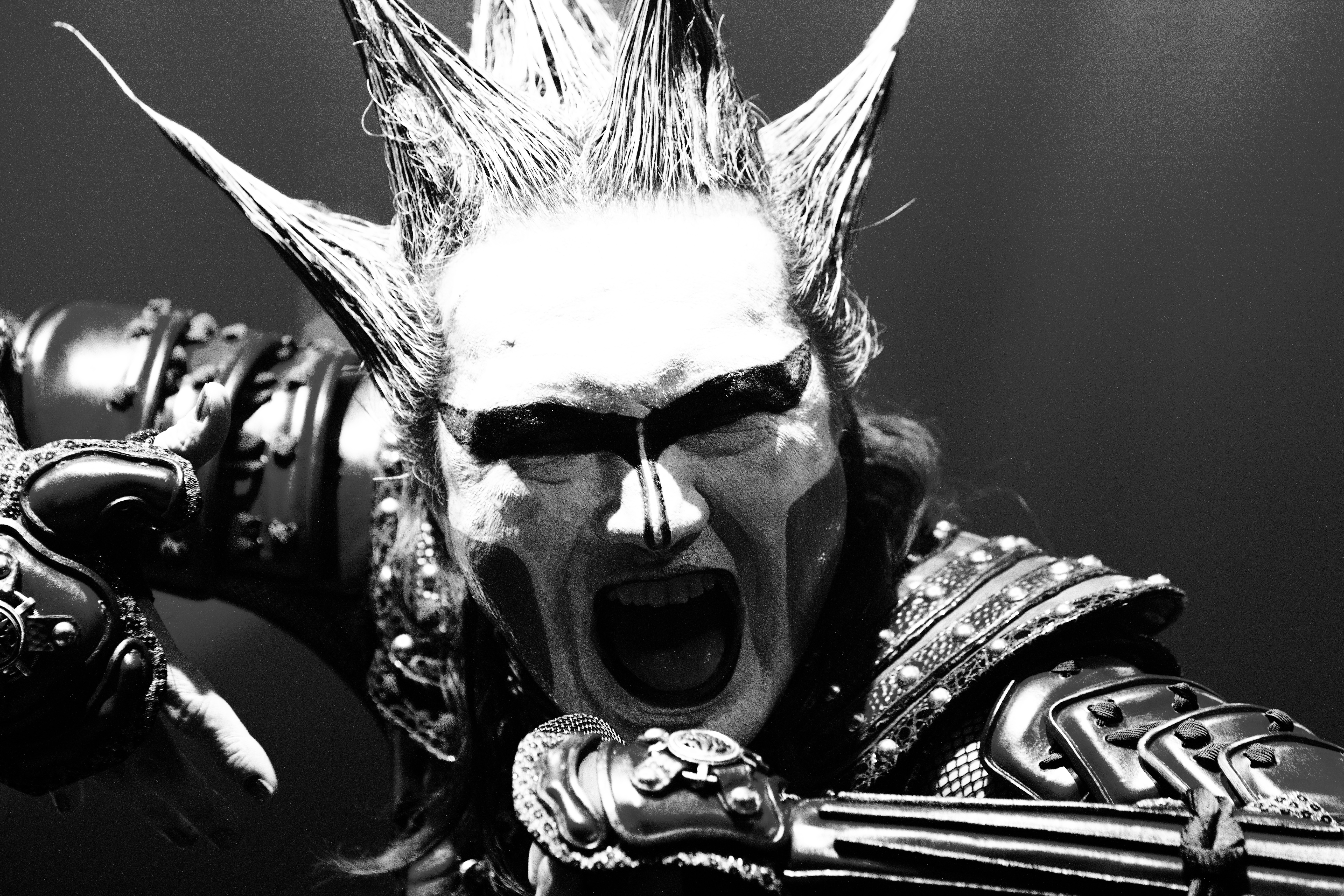
Seikima-II have been some of the best entertainers in Japanese metal ever since forming in 1982. With aesthetics inspired in part by Kiss, elaborate make-up, pyrotechnics and energetic live performances, they took all of those Kiss-like traits and amplified them tenfold, playing heavy metal instead of rock and in addition to the image, gave themselves a backstory as demons who came from the demon world Makai, on a mission to conquer the world with heavy metal and propagate Satan. With a sense of humor unrivaled by pretty much any other Japanese metal band, they built a long-running, legendary career (10 million records sold) with humorous gags and props pertaining to how sinister they were and better yet, they matched the humor of their performances pound for pound with abundant skill and songwriting ability.
Seikima-II was so dedicated to the band’s backstory that when they formed, they “prophesied” that they would disband at the end of the century and did so at exactly 23:59:59, December 31, 1999. Vocalist and leader Demon Kogure is about as well known as any single rock star in Japan and has stayed in character since 1982, never once revealing his true identity, despite appearing frequently in pop-culture. The band stayed disbanded from 1999 until 2020, though during their time split up, they played numerous reunions, all of which sold out almost instantaneously. Seikima-II have been referenced numerous times in pop-culture in Japan, with band members appearing in famous anime such as Fist of the North Star, to partially influencing Detroit Metal City, to even featuring in their own video game in the 80s.
Seikima-II – Heavy Metal Is Dead
2. X Japan

Origin: Tokyo, Japan
Year Formed: 1982
Though they didn’t quite top this list, X Japan could have very easily been number one, in fact, I flip-flopped between my 1 and 2 multiple times before publishing this article, it was such a tough choice. Massively influential? Pop culture icons? Multiple of the most famous Japanese metal songs ever written? check, check and check. At an incredibly respectable #2 on this list, X Japan were the biggest metal act in Japan by a massive margin from the year 1988 until their disbandment in 1997, selling upwards of 10 million records in just those 9 years, with a total somewhere around 15-20 million today, making them the best-selling metal act in the history of Japan (their claim of 30 million was made only by Yoshiki, I’ve never found info to actually validate that). X Japan with their controversial and rebellious style were groundbreakers who captured the attention of the youth of their entire nation, and in the process became the main act that kicked off the visual kei glam movement which is still prominent in all forms of Japanese music.
Changing their style often and effectively, X Japan continued to thrive throughout the 90s when metal music was at its very weakest, releasing three #1 charting albums and another that hit #6, featuring numerous styles, power metal, hard rock, heavy metal, symphonic metal, and progressive metal among a few other experimental ideas. This band was so famous at their height that they had both a video game and even got to sponsor a racing team for a short time. X Japan features perhaps the most famous drummer in all of Japan, Yoshiki, as well as possibly the best known Japanese guitarist of all-time, Hide, who tragically passed away in 1998. This band was huge not just to Japanese metal, but they, along with a handful of other bands like Buck-Tick, Color, and Dead End expanded the scope of Japanese rock, paving the road walked by every visual kei band you have seen from the early 90s to present day.
X Japan (X) – Blue Blood
Who could possibly beat that, you might ask? Well…
Finally, the greatest Japanese metal band of all-time is . . .
1. Loudness

Origin: Osaka, Japan
Year Formed: 1981
Loudness are by the tiniest margin the greatest band to ever grace Japanese heavy metal. My reasoning for this pick is that while yes, X Japan has sold more records, these two bands both formed at roughly the same time, and while X Japan was going through the motions of their indie/demo days, trying to pick up a record deal from 1982 up until after their full-length debut in 1988, Loudness managed to jump immediately into major success with their debut in 1981, The Birthday Eve, which quickly went gold (200,000+) in sales in Japan (Toshi and Yoshiki were even playing Loudness songs among others when they were in their band Noise from 1981 to 1982). Loudness’ success has endured for decades now, nonstop, while X Japan had been missing, disbanded, for an entire decade of that time and haven’t released new metal material since reforming in 2007 either, outside of a couple songs.
For over 25 years, X Japan had wanted to achieve major success in North America without any results to really show for their efforts until just recently. However, even before their global success, Loudness were dominating the Japanese charts. Both The Law of Devil’s Land (1983) and Disillusion (1984) earned them gold disc certifications, each selling a whopping 200,000 copies by 1985. Loudness then had the honor of being the first Japanese metal band to ever sign a record deal with a major American label, and had the first three Billboard charting albums by a Japanese metal band, with Lightning Strikes hitting #64, Hurricane Eyes hitting #190, and of course their iconic Thunder in the East hitting #74 and staying on the charts for 23 weeks, selling upwards of 300,000 copies in America, somewhere approaching gold certification range. Ever since the mid-’80s, The core members of Loudness have been regarded as some of the most iconic metal musicians in their home country. Even today Loudness tour internationally constantly and get to perform international metal festivals still, whereas X Japan have only started playing their very first shows on U.S. soil in the past decade, plus in their heyday Loudness got to share the stage at legendary American venues such as Madison Square Garden with bands like Motley Crue and Stryper way back in the ’80s, a venue X Japan only played for the first time a few years ago.
Of course, something Loudness never did achieve was a #1 in their home country which X Japan did do more than once, nor did Loudness sell out huge stadiums like the Tokyo Dome constantly, however Loudness has only narrowly missed a #1, most notably with their 1992 album Loudness which hit #2 on Oricon. X Japan were extremely strong in the 90s, but while traditional heavy metal had died off quite badly as evidenced by most of Loudness’ peers breaking up for at least a few years, Loudness also managed to adapt to the 90s successfully, adopting a groovier sound and continuing to chart very high on Oricon without significant change to the quality of the product they put out initially. Exact sales figures are hard to find, but Loudness has certainly sold multiple million albums worldwide, somewhere near, but less than that of Seikima-II and both bands less than X Japan.
The thing with Loudness though is that while they sold less, they achieved essentially every goal X Japan had set for their career, in addition to a couple extras, and while Loudness didn’t have a gigantic pop culture movement at their feet the way X Japan did, they were early and they were innovators, driving Japanese metal forward to what it is today unlike any other band in the country’s history without really letting up or disbanding at any point.
The magazine Metallian said it best when speaking of Loudness: “There are few bands that can claim to have opened up the minds and ears of an entire music scene to the existence and possibilities of its particular country.”
Loudness – Crazy Doctor
Near Misses/Honorable Mentions
I’m sure you noticed there were many fairly big names who weren’t included in this list, in some cases it’s because some of these bands are relatively young, and in a few years they would certainly hold a place somewhere on here. Others could have held a place on this list years ago, but have been pushed out by current important acts. I’d like to mention a few of these great Japanese metal acts below in no particular order:
- 5X
- Abigail
- Ark Storm
- Atsushi Yokozeki
- Bellzlleb
- Blaze
- Casbah
- Coffins
- Crossfaith
- Defiled
- D’erlanger
- Double Dealer
- Fastkill
- Gallhammer
- Gastunk
- Gonin-ish
- Gotsu Totsu Kotsu
- Gyze / Ryujin
- Heavy Metal Army / Eastern Orbit
- Hellchild
- Hellen
- Hizaki Grace Project / Hizaki
- Hurry Scuary
- Jurassic Jade
- Matenrou Opera
- Metalucifer
- Misako Honjoh
- Moi Dix Mois
- Pharmacist
- Rajas
- Ritual Carnage
- Rosenfeld
- Sly
- Sniper
- S.O.B
- Swarrrm
- Tilt
- United
- Unlucky Morpheus
- Volcano
- Wolf
- XYZ>A
- Yellow Machinegun
- Zigoku Quartet
Leave a Reply